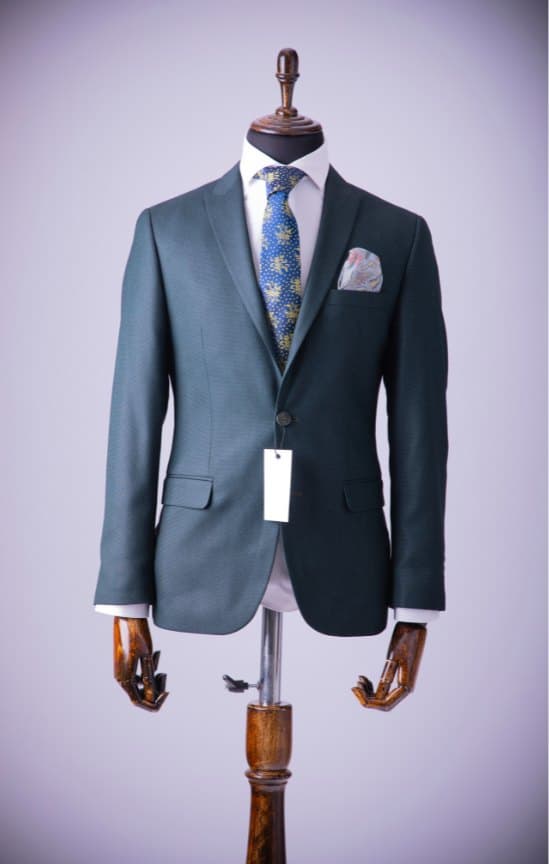
A suit can be forgiven many things. A fabric slightly out of season, a lapel a touch wide for the fashion of the year — these are matters of taste, and taste moves. Fit is different. Fit is the one quality no label can imitate, and it is decided in four places: the shoulders, the collar, the sleeve and the trouser break. Get those four right and everything else follows; get one wrong and no price tag will hide it.
At the atelier in Bourj Hammoud we cut for each client's body, never for a size chart, so every fitting turns around the same quiet checklist. It is worth knowing that checklist yourself — whether you are commissioning your first suit or judging one already hanging in your wardrobe.
The shoulders: what no alteration can rescue
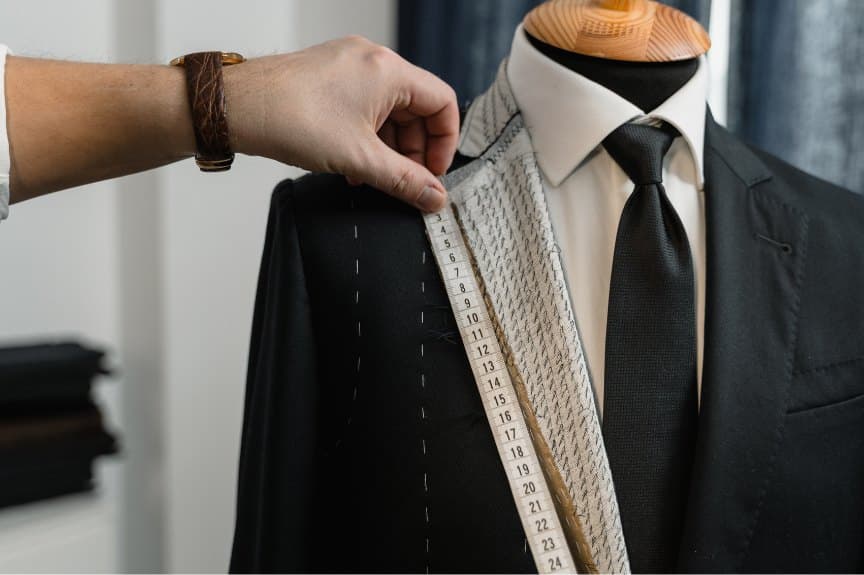
The shoulder seam should finish exactly where your shoulder bone ends, so the sleeve falls in one clean, unbroken line. A jacket that extends past the bone collapses into a dent on the upper arm; one that stops short pulls the whole chest tight and rides up with every movement. Look for a smooth plane of cloth from the collar to the sleevehead, with nothing bunching and nothing hollow.
This is also where honest advice matters most. Nearly every other part of a jacket can be adjusted, but rebuilding a shoulder means rebuilding the coat. When a suit is cut bespoke, the shoulder is drafted from your own measurements from the first chalk line — it is the foundation the rest of the pattern stands on.
Nearly everything on a jacket can be altered. The shoulder is the exception: it is cut right, or it is cut again.
The collar: half a finger of shirt, no gap, no roll
Stand naturally and look in the mirror. The jacket collar should sit flush against the shirt collar all the way around the neck, with about a centimetre — half a finger — of shirt showing above it. A gap at the back of the neck means the collar is standing away from the body; a horizontal roll of cloth just beneath it means the back is cut too long for your posture.
Posture is exactly the point. Few men stand like shop mannequins: shoulders slope, necks pitch forward, one side of the body sits lower than the other. A bespoke pattern absorbs those truths quietly, which is why a well-cut collar looks unremarkable — it simply stays put, whether you are seated at dinner or reaching across a dance floor.
The sleeve: let the shirt do the talking
The jacket sleeve should end at the wrist bone, letting half a centimetre to a centimetre of shirt cuff show — a band of cotton or linen that frames the hand and separates a tailored man from a merely dressed one. Too long, and the sleeve swallows the hand; too short, and the arm looks borrowed from another suit.
Watch the sleeve at rest, too. It should hang with a gentle forward curve, because arms do not hang straight and a straight sleeve wrinkles. At a fitting we pin the sleeve while you stand naturally, then again while you move — a cuff that behaves at attention and misbehaves in a handshake is only half finished.
The break: where the trouser meets the shoe
The break is the small fold the trouser makes where it lands on the shoe. A full break pools generously and reads traditional; a half break gives one clean crease and suits most men and most occasions; no break at all ends the trouser just at the shoe and looks sharpest on slimmer cuts. The choice between them is a matter of style — what is not negotiable is that the front crease falls dead straight and the hem sits level all the way around.
There is a final test that is not visual at all. Button the jacket and move: sit down, reach forward, cross your arms. You should feel the suit follow you — no pull across the back, no strain at the closing button, no collar lifting away from the shirt. A suit that passes the mirror but fails the movement is a photograph, not a garment.
Bring the checklist to a fitting
Every commission at Makis' Tailor begins with these four points and a full set of measurements, taken at the atelier or over a video appointment if that suits your week better. Bespoke suits start from $400, and a free adjustment before delivery is part of every order — because the fit is only finished when it is right on you, not on the hanger.